
Neuromodulation at Psymate Clinic
Precision brain-based treatment, guided by clinical judgment.
Neuromodulation at Psymate Clinic
Precision brain-based treatment, guided by clinical judgment.
At Psymate Clinic, neuromodulation represents the careful application of neuroscience to clinical care—using technology to support brain regulation where conventional approaches alone may be insufficient or suboptimal.
Neuromodulation is never protocol-driven or device-led.
It is psychiatrist-led, data-guided, ethically governed, and fully integrated into personalised treatment plans.
WHAT IS NEUROMODULATION?
Neuromodulation refers to non-invasive techniques that influence brain activity by targeting specific neural circuits involved in mood, cognition, behaviour, and self-regulation.
At Psymate, neuromodulation is used to:
Modulate dysfunctional neural networks
Support recovery without systemic medication exposure
Enhance response to psychotherapy and pharmacotherapy
Improve functional and cognitive outcomes
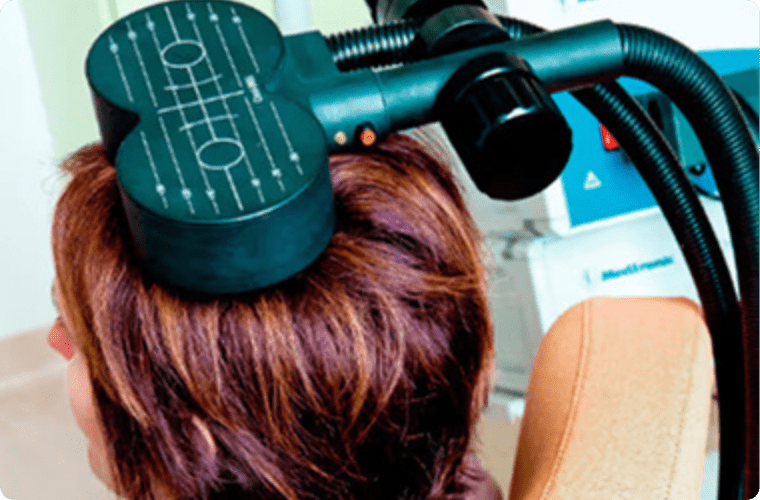
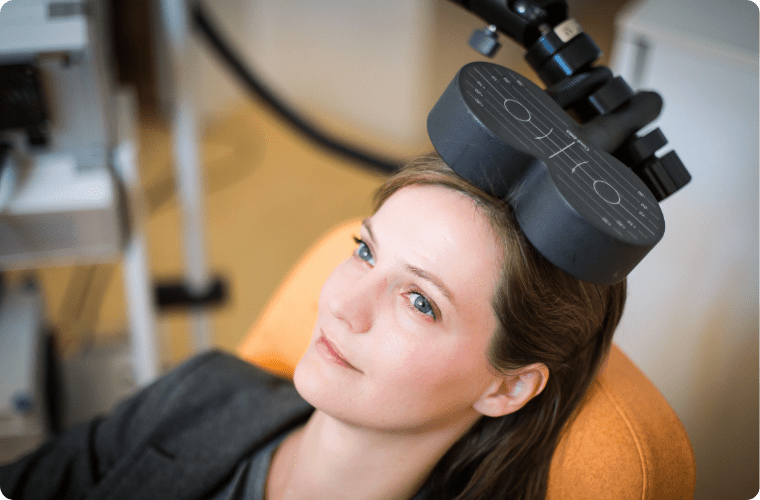
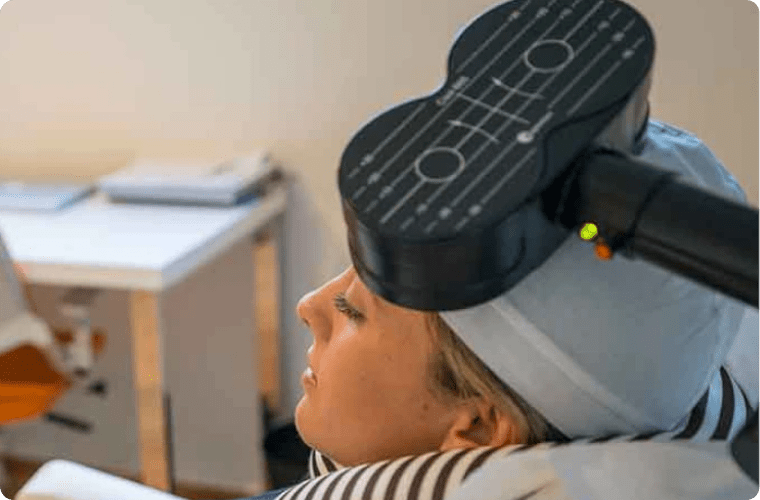
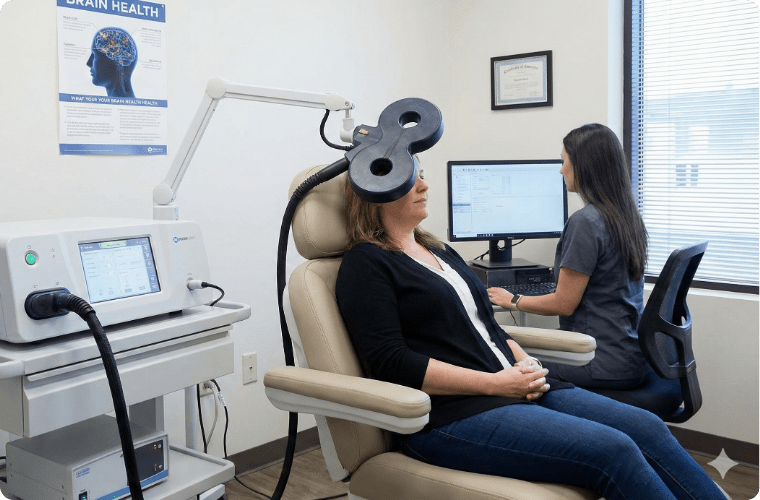
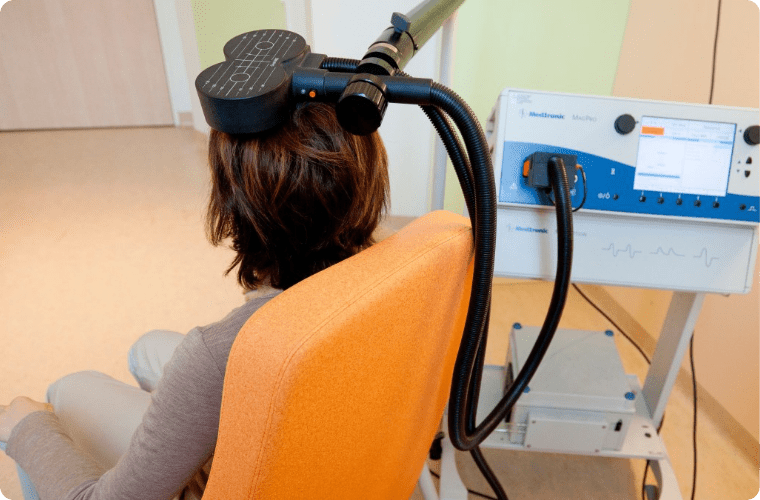
The most established modality used is repetitive Transcranial Magnetic Stimulation (rTMS).
THE ROLE OF THE PSYCHIATRIST (CENTRAL & NON-DELEGABLE)
Neuromodulation at Psymate is never technician-driven.
The psychiatrist:
Establishes diagnostic clarity and clinical formulation
Determines clinical indication and timing
Selects targets and stimulation protocols
Integrates rTMS with medication and psychotherapy
Reviews outcomes longitudinally and refines strategy
This ensures neuromodulation is applied with precision, restraint, and purpose—not as a generic intervention.
Importantly, rTMS at Psymate is not restricted to “last-resort” or treatment-resistant cases. It is used strategically, wherever evidence supports benefit and safety.
WHY NEUROMODULATION AT PSYMATE
Neuromodulation may be considered when:
Symptoms persist despite standard interventions
Psychotropic medications cause limiting side effects
Brain-based regulatory support may accelerate recovery
Reduction of long-term medication burden is desirable
Complex or recurrent illness requires integrative care
THE rTMS ADVANTAGE
When clinically indicated, repetitive Transcranial Magnetic Stimulation (rTMS) offers several advantages over long-term reliance on psychotropic medications.
These advantages are evaluated within a psychiatrist-led, data-driven framework—never as blanket claims.
Key advantages include:
1
Targeted Brain Circuit Modulation
rTMS acts on specific neural circuits implicated in symptoms, rather than producing diffuse, whole-body effects.
2
Minimal Systemic Side Effects
Unlike many psychotropics, rTMS does not typically cause weight gain, sexual dysfunction, gastrointestinal upset, or sedation.
3
No Daily Medication Burden
rTMS does not require daily ingestion or long-term adherence, reducing treatment fatigue and compliance challenges.
4
Preservation of Cognitive Clarity
rTMS does not impair alertness, memory, or executive functioning—allowing continuation of work and daily life.
5
Compatibility With Other Treatments
rTMS integrates safely with psychotherapy and pharmacotherapy, often enabling dose reduction over time.
6
Non-Invasive and Anaesthesia-Free
rTMS requires no surgery, sedation, or hospitalisation and is delivered on an outpatient basis.
rTMS is not positioned as a replacement for all medications, but as a precision clinical tool that can enhance outcomes while reducing long-term pharmacological burden where appropriate.
THE PSYMATE rTMS EXPERIENCE
Neuromodulation at Psymate is defined not just by technology—but by how rigorously and responsibly it is delivered.
World-Class, Latest-Generation Equipment
Psymate utilises advanced rTMS systems that enable:
Accurate and reproducible targeting
Protocol flexibility
Consistent stimulation delivery
Real-time treatment monitoring
Technology selection prioritises clinical reliability over novelty.
State-of-the-Art rTMS Laboratory
rTMS is delivered within a dedicated, purpose-designed clinical lab, ensuring:
Patient comfort and safety
Controlled and standardised treatment conditions
Consistency across sessions
The environment reflects the seriousness of the intervention—not a casual add-on service.
Meticulously Designed Treatment Protocols
Each rTMS protocol is:
Selected based on diagnosis and symptom profile
Individualised for frequency, intensity, and duration
Reviewed and modified based on response and tolerability
Protocols are dynamic and responsive, never pre-fixed.
Clinical Governance & Oversight
All neuromodulation at Psymate is governed under the direct clinical leadership of Dr. Samant Darshi, Psychiatrist and Neuromodulation Expert.
Dr. Darshi has received formal training and academic exposure in rTMS and advanced neuromodulation techniques through Harvard University, and remains actively involved in:
Indication decisions
Protocol oversight
Outcome review
Ethical governance
This ensures neuromodulation is practised as clinical medicine, not device-based therapy.
Integrated, Not Isolated
rTMS at Psymate is never delivered in isolation. It is embedded within:
Psychiatric formulation

Psychotherapy planning

Longitudinal outcome tracking
Integration enables durable recovery, not transient symptom suppression.
SAFETY, ETHICS & GOVERNANCE
All neuromodulation services operate under:
Clear clinical indications
Ongoing informed consent
Evidence-based protocols
Psychiatrist-led oversight
Continuous safety and outcome monitoring
Technology is applied with humility, recognising both its power and its limits.
WHAT PATIENTS CAN EXPECT
If neuromodulation is recommended, patients can expect:
There is no obligation—only informed choice.
BEGIN WITH CLINICAL CLARITY
Neuromodulation decisions begin with diagnosis and understanding, not technology.
A clinical consultation helps determine: